Rust, solo survival lessons from Oilrats' V5 wipe-day run
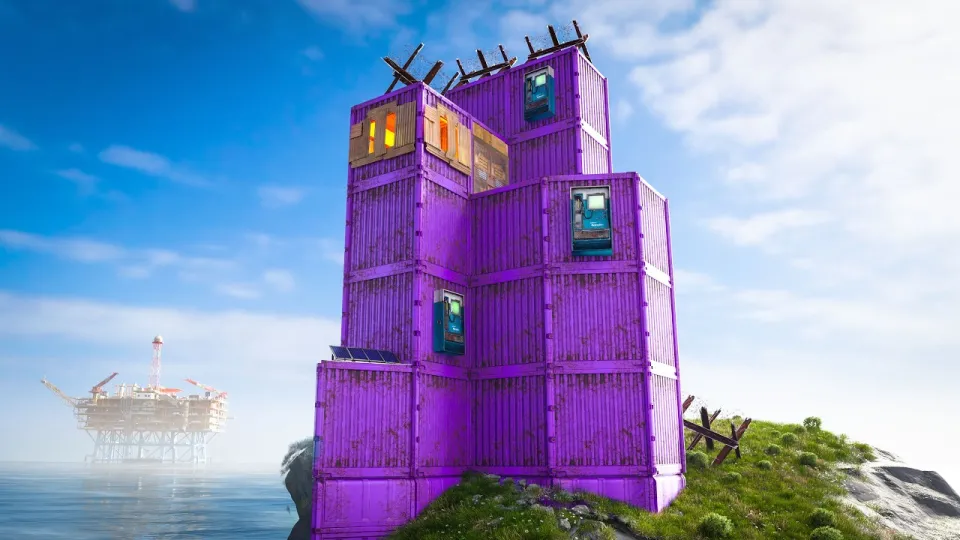
Video: A Solo's Will to Thrive V5 - Rust
You can order the same kind of articles for your own video to boost it on YouTube and Google. Just message the Telegram bot @sat_sit_bot. The bot writes and publishes the articles itself (with your YouTube video embedded) on popular topical websites (no ads). Free trial — 50 articles.
· based on the channel Oilrats
Key takeaways
- Rust is a hardcore survival game where a solo player builds a small base, farms scrap and components, and fights clans that can field six or more players at once.
- In the V5 solo wipe-day video, Oilrats starts with the familiar 2x1 bunker — a compact two-by-one base with a hidden loot room — before moving into Large Oil Rig.
- The centrepiece is a defence against a six-player group carrying two M2 Brownings and a dedicated rocket PvPer, which the solo player still survives.
- Editing by purpluu and mammoth is part of the draw: underwater audio muffling, clean transitions and a roughly two-hour runtime.
- Oilrats sells a branded mousepad through the Epicdesk drop at https://epicdesk.shop/products/oilrats.
Rust is a hardcore multiplayer survival game where players wake up on a hostile island with a rock, gather wood and stone, build a base, and compete for scrap, components and military-grade loot against groups that often outnumber them five to one. For a solo player, surviving a wipe day means choosing a cheap, defensible base, farming efficiently, and knowing when to fight and when to run. The Oilrats solo series — including the V5 entry, published on 23 September 2026 — is a practical showcase of exactly that loop, and the channel's branded mousepad drop is available at the Epicdesk Oilrats mousepad page.
What Rust actually demands from a solo player
Rust is a game of compounding disadvantages for anyone playing alone: clans share farming, crafting and scouting, while a solo has to do all three at once and still defend a base overnight. The core loop on a fresh wipe is always the same. You spawn on a beach, hit trees and stones with a rock, craft a building plan and a tool cupboard, and claim a small piece of land before larger groups spread out. Scrap from monuments buys blueprints, and blueprints unlock the weapons and explosives that decide whether your base survives the week.
The pressure comes from three directions at once. First, resource competition: popular monuments like Launch Site, Airfield and the Oil Rigs are contested within the first hour. Second, raid threat: a solo base is a cheap target for a group with rockets and C4. Third, time: everything a clan splits across six players, a solo has to sequence alone, so every minute spent fighting is a minute not spent farming.
That is why solo Rust is less about aim and more about decision-making — where to build, what to farm, when to log off, and which fights are worth taking.
The 2x1 bunker: why every solo run starts small
A 2x1 bunker is a compact base with a two-by-one foundation footprint and a hidden or reinforced loot room, and it remains the default opening for experienced solo players because it is cheap, fast and hard to raid without explosives. The pattern is well known to anyone who watches solo Rust content: a small starter near a road or a low-tier monument, a tool cupboard placed to block building privileges, and a bunker mechanism that hides the main loot behind a wall that has to be destroyed before the loot room can even be reached.
The trade-offs are straightforward:
- Cost. A starter of this size needs only a few hundred wood and stone, so it can be finished before the first serious fight.
- Defence. Bunkers force raiders to spend extra explosives on structure rather than on doors, which raises the raid cost above what most groups will pay for a small solo target.
- Mobility. A small base is disposable. If the area turns hostile, the owner can move without losing much.
- Upgrade path. The same footprint can be expanded with a second floor, a shooting floor or a honeycomb shell once scrap and metal fragments allow.
Viewers of the series regularly note that the opening base never really changes, and that is the point: repetition of a proven starter is what makes the rest of the wipe possible.
Large Oil Rig as a solo loot route
Large Oil Rig is one of Rust's most profitable monuments, and running it solo is a calculated risk that pays in military crates, high-tier components and heavy weapons. The rig is reached by boat, guarded by scientists, and split across multiple levels connected by ladders and walkways, with locked crate events that attract other players. A solo run there requires a boat, enough meds and ammo to clear scientists, and a plan for leaving quickly once the loot is in hand.
What makes the rig worth the risk:
- Loot density. Military and elite crates on the rig can produce rifles, armour and components that would take hours to farm elsewhere.
- Isolation. Because access is by water, the number of players who can contest a rig at any moment is limited compared to land monuments.
- Escape options. A boat parked at the base of the rig is both the entry and the exit, so the run ends the moment the crates are emptied.
The danger is that a rig run is loud and slow. Scientists, gunfire and the boat engine all broadcast your position, and groups often camp the water around the rig waiting for a solo to come back loaded. Timing the run early, or immediately after a server-wide fight elsewhere, is what separates a successful rig from a lost kit.
Defending a solo base against a six-player raid
The defining sequence of the V5 run is a raid defence against a group of six, and it illustrates why base design matters more than raw aim in Rust. The attacking group brought two M2 Brownings — mounted .50 cal machine guns — and a player dedicated to firing rockets at defenders, a setup that would normally flatten a small solo base without resistance. Viewers reacted strongly to the imbalance, pointing out that six players with heavy weapons raiding one solo is about as lopsided as Rust gets.
What a solo defender can actually control in that situation:
- Peeking discipline. Short peeks from unexpected angles, rather than holding a single window, deny the M2 gunners a stable target.
- Explosive awareness. Rocket fire is slow and loud, so the defender can reposition between impacts instead of standing in the blast zone.
- Counter-push timing. Once the attackers commit to breaching a wall, they are grouped and exposed; that is the moment to push out rather than wait inside.
- Loot security. Keeping the best loot in a bunker room means a partial breach does not end the wipe.
The result — a small base holding against a heavily armed group — is the kind of outcome that solo players clip and share, and it is why defence footage consistently outperforms pure farming footage in Rust content.
Common questions about solo Rust, answered
Solo Rust questions tend to repeat across every wipe, and the answers are mostly about expectations rather than secrets. New players often ask how many hours it takes to become competitive; the honest answer is that map knowledge and base discipline matter more than raw playtime, though most players who win solo fights consistently have hundreds of hours behind them. Another recurring theme is group size: a solo should assume any fight near a monument involves at least two enemies, and plan an exit before engaging.
The most common doubts, in short:
- Is a 2x1 bunker enough? For the first days of a wipe, yes — it is cheap, hidden and expensive to raid relative to its contents.
- Should a solo run Large Oil Rig? Only with a boat, meds and an exit plan; the loot is excellent but the run is loud.
- How do you beat a clan raid? By making the raid cost more than the loot is worth, and by pushing when attackers commit to a breach.
- How much of solo Rust is PvP? Less than highlights suggest — farming, building and route planning take most of the time.
Useful links
- Oilrats mousepad and merch drop: https://epicdesk.shop/products/oilrats
- Oilrats on Twitch: https://www.twitch.tv/oilrats
- Oilrats on TikTok: https://www.tiktok.com/@oilrats
- Oilrats Discord: https://discord.gg/hrvWH8r9bS
- Oilrats on Twitter: https://twitter.com/OilratsRust
Final takeaway
Solo Rust is a game of preparation, and the V5 run shows the formula clearly: a cheap 2x1 bunker to survive the first night, a high-value monument run for gear, and disciplined defence when a group arrives with rockets and mounted guns. The editing — underwater audio that muffles and returns, transitions that hide themselves — turns a long wipe-day session into something watchable end to end, which is why the Oilrats channel keeps producing these solo movies at a steady pace. If you want to support the creator, the branded mousepad is available at the Epicdesk Oilrats drop.
Source: A Solo's Will to Thrive V5 - Rust · Markdown version
Questions & answers
Is Rust playable as a solo player in 2026?
Yes, but it requires a different approach than group play. A solo should build a small, cheap base like a 2x1 bunker, farm high-value monuments such as Large Oil Rig when the server is distracted, and avoid fights that do not protect loot. The disadvantage is real, but preparation closes much of the gap.
Why do solo players keep building the same 2x1 bunker?
Because it is the cheapest structure that still forces raiders to spend explosives on walls rather than doors. It can be built within the first hour of a wipe, hides the main loot behind a bunker mechanism, and can be expanded later if the wipe goes well.
How does a solo defend against a group with rockets and M2 Brownings?
By denying stable targets and punishing commitment. Short peeks from changing angles make mounted guns ineffective, repositioning between rocket impacts avoids splash damage, and pushing out while attackers are grouped at a breach turns their numbers into a liability.
Is Large Oil Rig worth running alone?
It is one of the best loot sources in the game, with military and elite crates that can produce high-tier weapons and components. The catch is that the run is loud and slow, so it works best with a boat ready, enough meds to clear scientists, and a plan to leave the moment the crates are empty.